
The Programmer Is Not Dead. The Programmer You Were Is.
The data from 2023 to 2026 tells a brutal story about who survives the AI wave — and it is not who you think.
The data from 2023 to 2026 tells a brutal story about who survives the AI wave — and it is not who you think.
A number has been quietly circulating in research circles since late 2025, and most people in the tech industry have chosen to look away from it. Between 2023 and 2025, overall programmer employment in the United States fell by 27.5 percent. Not 5 percent. Not a rounding error. Twenty-seven point five percent, confirmed by U.S. Bureau of Labor Statistics data cited in a December 2025 IEEE Spectrum report. For context, that is a steeper employment collapse than what most manufacturing sectors experienced during the first wave of industrial automation.
But here is the twist that changes everything: in the exact same period, employment for software developers — a distinct, more design-oriented category in the same government data — fell only 0.3 percent. And roles in information security, AI engineering, and systems architecture? They grew in double digits.
This is not a story about technology killing IT. This is a story about a massive, violent sorting taking place within the profession — and most people have not yet realized which side of the line they are standing on.
What Actually Happened
The inflection point traces back to November 2022, when ChatGPT was released to the public. Within months, companies began quietly running experiments: could AI tools reduce the need for the most junior, most routine layers of programming work? The answer arrived fast and was unambiguous.
By early 2024, ADP Research — using payroll data from 25 million workers across thousands of private companies — found that the United States employed fewer software developers than it had six years prior. That data point alone should have set off alarm bells across every computer science department in the country. It did not receive the front-page treatment it deserved.
Stanford University’s Digital Economy Lab then published what may become one of the defining economic papers of this decade. Using the same ADP payroll dataset, researchers found that employment for software developers aged 22 to 25 had declined nearly 20 percent from its peak in late 2022. The pattern was not random. The younger the worker, the steeper the drop. Workers aged 26 to 30 were mostly flat. Mid-career professionals aged 35 to 49 were stable or slightly growing. Workers 50 and older were also up. The jobs were not disappearing equally — they were disappearing from the bottom of the ladder.
Stack Overflow’s own analysis of its developer survey confirmed the picture from a different angle. AI tool usage during the development process reached 84 percent among active developers by 2025, up 14 percentage points from when they first started tracking the metric in 2023. Entry-level tech hiring fell 25% year over year in 2024. Junior developer employment among the 22-to-25 age group had dropped by nearly 20 percent from its 2022 peak.
The Goldman Sachs Research team estimates that if current AI use cases were to expand across the economy proportionally, 2.5 percent of total U.S. employment would be at risk of displacement. Within that broader picture, computer programmers appear on the high-risk list alongside accountants, auditors, legal assistants, and customer service representatives.
Why This Time Is Different
Three structural factors set this shift apart from previous technology disruptions — and understanding them is what distinguishes informed career decisions from wishful thinking.
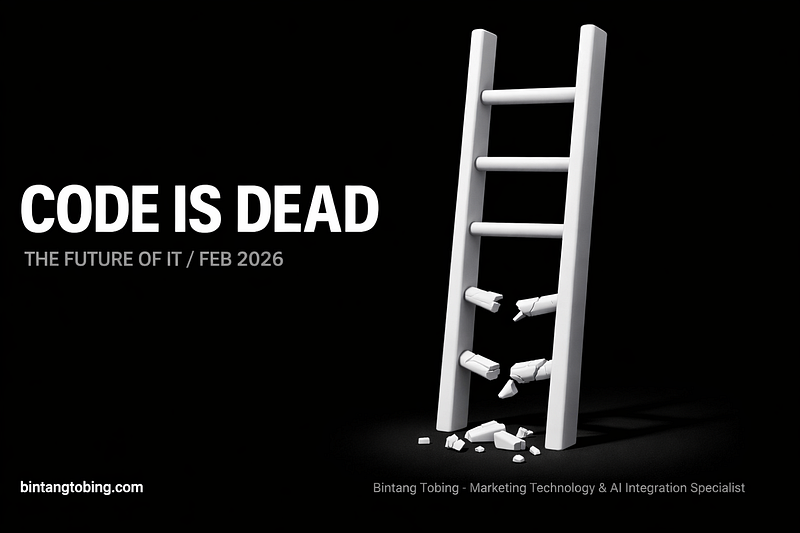
First, the nature of what AI is replacing is precisely the training ground for everything else. Previous automation waves — spreadsheets replacing bookkeepers, CAD replacing draftsmen — left intact the apprenticeship ladder within skilled professions. You still needed junior workers to do junior work before they could do senior work. AI-assisted coding tools have now automated a significant portion of what junior developers actually do: writing boilerplate, generating simple modules, building basic bug fixes, and producing unit tests. According to multiple industry reports, AI now handles somewhere between 40 and 60 percent of routine coding tasks. GitHub Copilot alone reports a 46 percent code-completion rate, though only about 30 percent of that output is accepted by developers as-is. The ladder has lost several rungs — and the people who needed those rungs the most have nowhere to start climbing.
Second, the productivity math inside companies has fundamentally changed. When Salesforce CEO Marc Benioff announced in late 2024 that the company would pause hiring new software engineers due to efficiency gains from AI tools, it was not a one-off statement — it was a preview of a boardroom logic that has since spread widely. If AI tools deliver a 30 percent productivity boost to your existing engineering team, you need 30 percent fewer new hires to maintain the same output. Microsoft-backed trials found a 21 percent productivity boost in complex knowledge work. McKinsey data suggests AI can boost overall employee productivity by up to 40 percent. Companies have done the math, and the math says: hire fewer juniors, keep your best seniors, and hand them better tools.
Third, the split between “programmer” and “developer” in government data reveals an important trend in the profession's future. A programmer, in the labor category sense, primarily writes code. A developer architects, designs, and creates systems — code is one output among many. AI is devastating the first category while barely touching the second. This is not an accident. It reflects exactly what AI is good at: pattern completion within defined structures. What it is not good at — contextual judgment, systems thinking, translating ambiguous business requirements into technical architecture, navigating organizational constraints — is precisely what developers, architects, and senior engineers do all day.
The Outlier: Who Is Actually Winning
While the bottom of the IT job market contracts, the top is experiencing something that looks almost like a feeding frenzy.
AI engineers at Meta earn an average base salary of $201,906, with total compensation packages reaching $451,000. The average AI engineer salary across the U.S. industry jumped to $206,000 in 2025, a $50,000 increase from the previous year, according to Second Talent’s market analysis. At senior and staff levels, the premium for AI specialization reaches 18.7 percent above equivalent non-AI roles — a gap that has grown, not shrunk, over the past year.
Information security analysts are growing at double-digit rates. The demand for prompt engineers surged 135.8 percent in 2025. Over 75 percent of AI job listings now specifically seek domain experts — not generalists, not people who can “do a little of everything,” but deep specialists. PwC’s 2025 Global AI Jobs Barometer found that workers with AI experience earn up to 25 percent more than peers in similar technical roles without that specialization.
The Morgan Stanley Research team projects the software development market could grow at a 20 percent annual rate, reaching $61 billion by 2029. A Morgan Stanley AlphaWise survey of chief information officers found that a 3.9 percent growth in software spending is planned for 2026. The thesis from Morgan Stanley is direct: AI will not eliminate software developer roles — it will create more of them, because enterprises are building more complex applications and tackling years of accumulated technical debt that AI tools can now help address faster. The demand is growing, but for a specific kind of developer — one who can work with AI, not one who tries to compete against it.
The Misread Story
The headline that dominated most of 2024 and early 2025 was some variation of: “AI Will Replace Programmers.” It was a clean, provocative narrative that drove enormous amounts of traffic and anxiety. The reality is considerably more nuanced and, in some ways, more unsettling.
The headline said: AI is threatening all programming jobs. The reality is: AI has already eliminated a specific and important subset of programming jobs — the entry-level, routine, pattern-completion work that used to train the next generation of senior engineers. The threat to senior developers is real but distant and conditional. The threat to junior developers is not a prediction — it has already happened.
This distinction matters enormously because it changes what the correct response looks like. If the threat were broadly distributed, the advice would be: wait and see. Because the threat is concentrated at the entry level and in pattern-completion work, the correct response is urgent and specific: move up the value chain before the platform you are standing on disappears entirely.
The Bigger Shift
The development that received the least attention in all of this — buried under headlines about job losses and productivity gains — is a quote from Anthropic CEO Dario Amodei in March 2025. He predicted that within 3 to 6 months, AI would be writing 90 percent of all code. That prediction was aggressive, probably too aggressive for the timeline he specified. But the direction of travel it implies is not being seriously disputed by anyone paying close attention to the rate of capability improvement in AI coding tools.
What this means structurally is that the role of the human in software development is shifting from implementer to orchestrator. The programmer of 2030 is less likely to spend the majority of their day writing code line by line. They are more likely to be managing AI agents — directing what gets built, verifying that it is being built correctly, integrating it into systems, ensuring it aligns with business goals, and catching the edge cases and failure modes that AI reliably misses. One Polish IT analyst described it vividly: the developer evolves from an individual contributor to a manager of multiple AI agents.
This is not a small job. It is a different job. And it requires a different skill set — one that's less focused on syntax mastery and more on systems thinking, business context, and the judgment to evaluate AI output critically rather than accepting it blindly.
What the Infrastructure Looks Like
Behind the noise about jobs is a quieter but more important story about what is being built. The Morgan Stanley survey of 100 chief information officers in the U.S. and Europe found that software-related spending is a top organizational priority for 2026, with companies increasing investments despite broader economic uncertainty. The global AI market is projected to grow at a roughly 30 percent compound annual growth rate through 2030. By early 2025, one in four enterprises with 100 or more engineers had already moved beyond testing and were actively deploying AI tools in their production development workflows.
The World Economic Forum’s Future of Jobs Report 2025 found that 39 percent of job skills will transform by 2030, with technical talent needing a stronger mix of AI fluency, systems thinking, and soft skills. The skills that are growing in demand, according to their data: advanced IT and data analytics, projected to grow 34 percent. Basic IT skills: projected to grow only 15 percent. The gap between those two numbers is the entire story. The platform is not collapsing. The platform is bifurcating — and the direction you move on it is becoming the most consequential career decision you will make this decade.
What This Means for You
If you are a developer with more than five years of experience, the most dangerous thing you can do right now is assume that your seniority is a moat. It is not. It is a head start. The people who will thrive in the 2026-to-2030 window are those who actively close the gap between where they are and where demand is concentrating — AI engineering, systems architecture, MLOps, cloud infrastructure, security, and the combination of technical depth with business domain expertise.
If you are early in your career, the news is genuinely hard, and you deserve honesty about it rather than false reassurance. Entry-level roles are not returning to their previous volume. The path forward requires skipping the apprenticeship model, which no longer exists, and compressing the learning curve by working aggressively with AI tools from the beginning—not to replace your skills, but to build them faster. Google’s Yossi Matias said it directly: “The fundamentals of programming may be more important today than ever in the age of AI.” Understanding what is happening under the hood gives you the ability to evaluate, direct, and correct AI output. Without that foundation, you are not a developer — you are a prompt typist.
If you manage IT teams or make hiring decisions, the calculus has changed. The productivity gain from AI tools is real, but so is the risk of hollowing out the pipeline. A team of senior engineers with excellent AI tooling and no junior pathway is one generation away from a severe knowledge gap. The companies that navigate this well will be the ones who figure out how to compress the junior-to-senior development pipeline rather than eliminating it entirely.
The skills that survived the transition from COBOL to Java, from jQuery to React — systems thinking, problem decomposition, technical communication, complex debugging — are the same skills that will outlast whatever framework or AI tool dominates in 2030.
Looking Ahead
The next 12 to 24 months will bring several developments worth watching closely. AI coding agents are moving from assistants that complete code within an IDE toward autonomous systems that can take a requirements description and produce a working system architecture with minimal human instruction. Anthropic, OpenAI, and Google are all investing heavily here. The question is not whether this capability will arrive but how quickly it will reach production-level reliability.
The cybersecurity labor market is tightening in the opposite direction from the broader programming market. As AI systems become core infrastructure, the attack surface grows, and the number of people who understand both AI systems and security deeply enough to defend them is small and getting smaller relative to demand. InfoSec analysts have grown in double digits over the same period, while junior programmer employment fell 27.5 percent.
The bifurcation in the IT job market will eventually force a reckoning in computer science education. A curriculum built around teaching students to write code efficiently is increasingly misaligned with what the market actually needs. The schools and programs that adapt fastest — toward systems thinking, AI integration, architecture, and ethics alongside technical fundamentals — will produce the graduates who find the jobs that exist.
The programmer is not dead. But the programmer who only writes code, who sees their value as purely in the implementation layer, who has not yet seriously engaged with what AI tools can do and cannot do — that version of the profession is disappearing in real time. The data is not ambiguous about this anymore. The question that remains is personal: which side of the sorting are you choosing to stand on?
Follow more analysis at bintangtobing.com